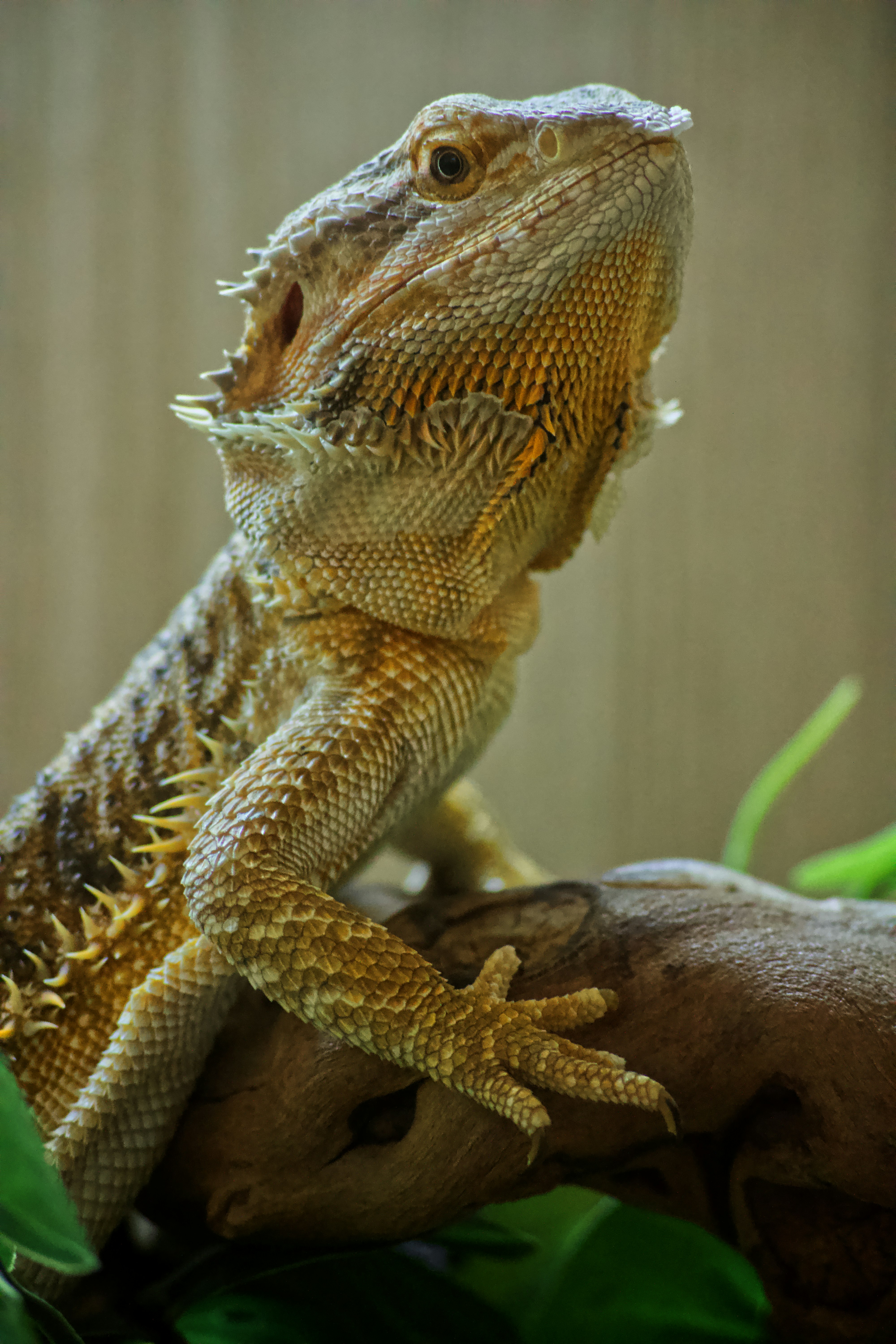
Friendly and docile lizards that have become popular pets due to their easy care requirements and gentle nature. Known for their "beard" which they puff up when threatened or displaying dominance.
Bearded dragons, scientifically known as Pogona, are a genus of reptiles containing eight species, all native to Australia. They are characterized by their broad, triangular heads, flattened bodies, and the spiny "beard" under their chin.
These lizards are popular pets due to their calm temperament, relatively easy care requirements, and interesting behaviors. They are diurnal animals, meaning they are active during the day and sleep at night.
Bearded dragons are omnivores, eating a diet of insects, vegetables, and fruits. They are also known for their unique way of communicating through body language, such as head bobbing, arm waving, and beard puffing.
Bearded dragons are found throughout Australia, in a variety of habitats including deserts, woodlands, and scrublands. They prefer arid and semi-arid environments with plenty of rocks and branches for basking and hiding.
In the wild, they spend their days basking in the sun to regulate their body temperature, hunting for food, and hiding from predators. They are well-adapted to their environment, with specialized scales that help them retain moisture.
During the hottest parts of the day, they will retreat to cooler areas or underground burrows to avoid overheating. In cooler months, they may enter a state of brumation, similar to hibernation in mammals.
They puff out their beards and darken them when threatened or during mating displays.
Bearded dragons wave their arms to show submission or to communicate with other dragons.
Males head bob to show dominance, while females may bob to indicate receptiveness.
With proper care, bearded dragons can live up to 10-15 years in captivity.
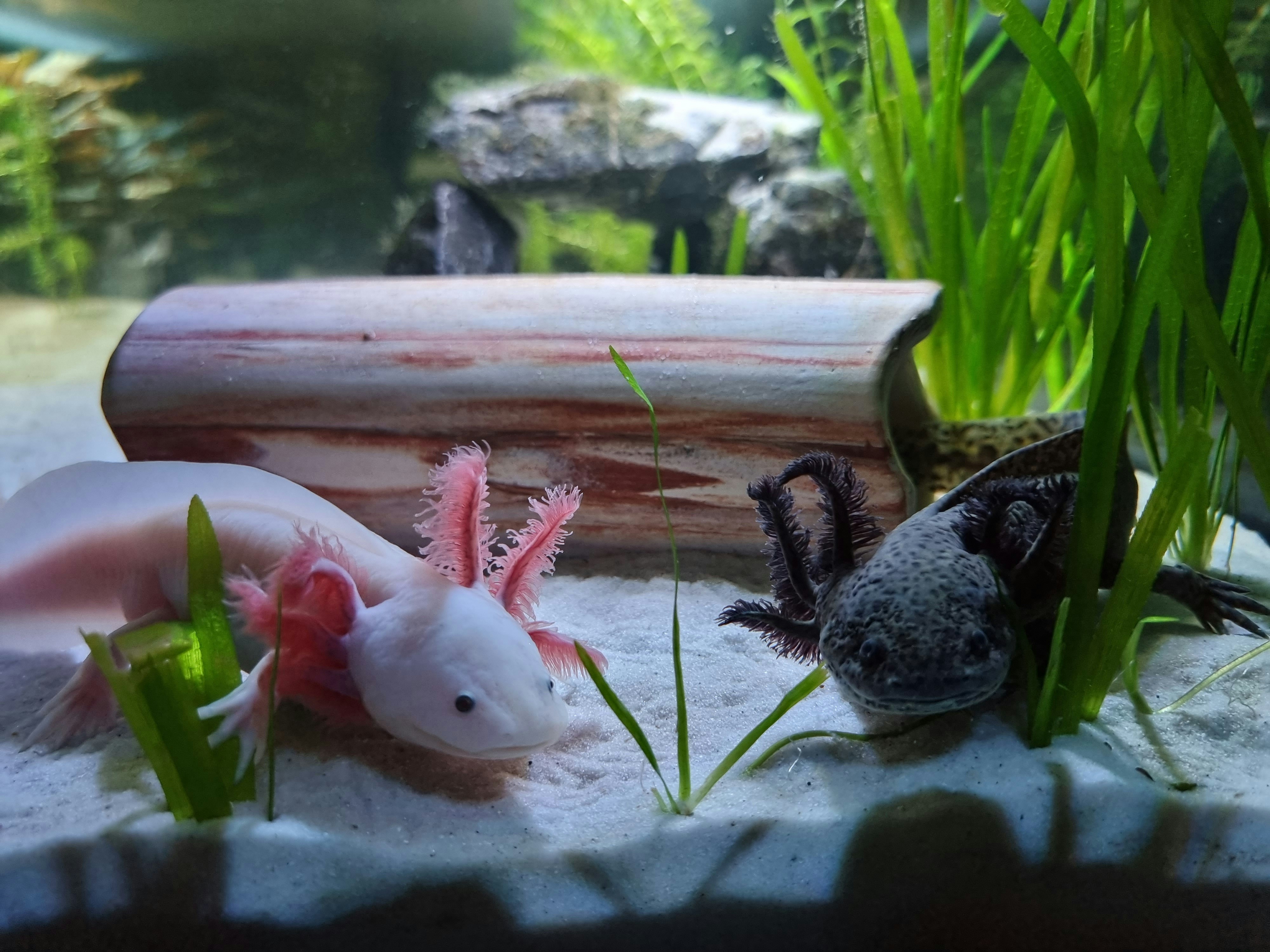
Amphibian
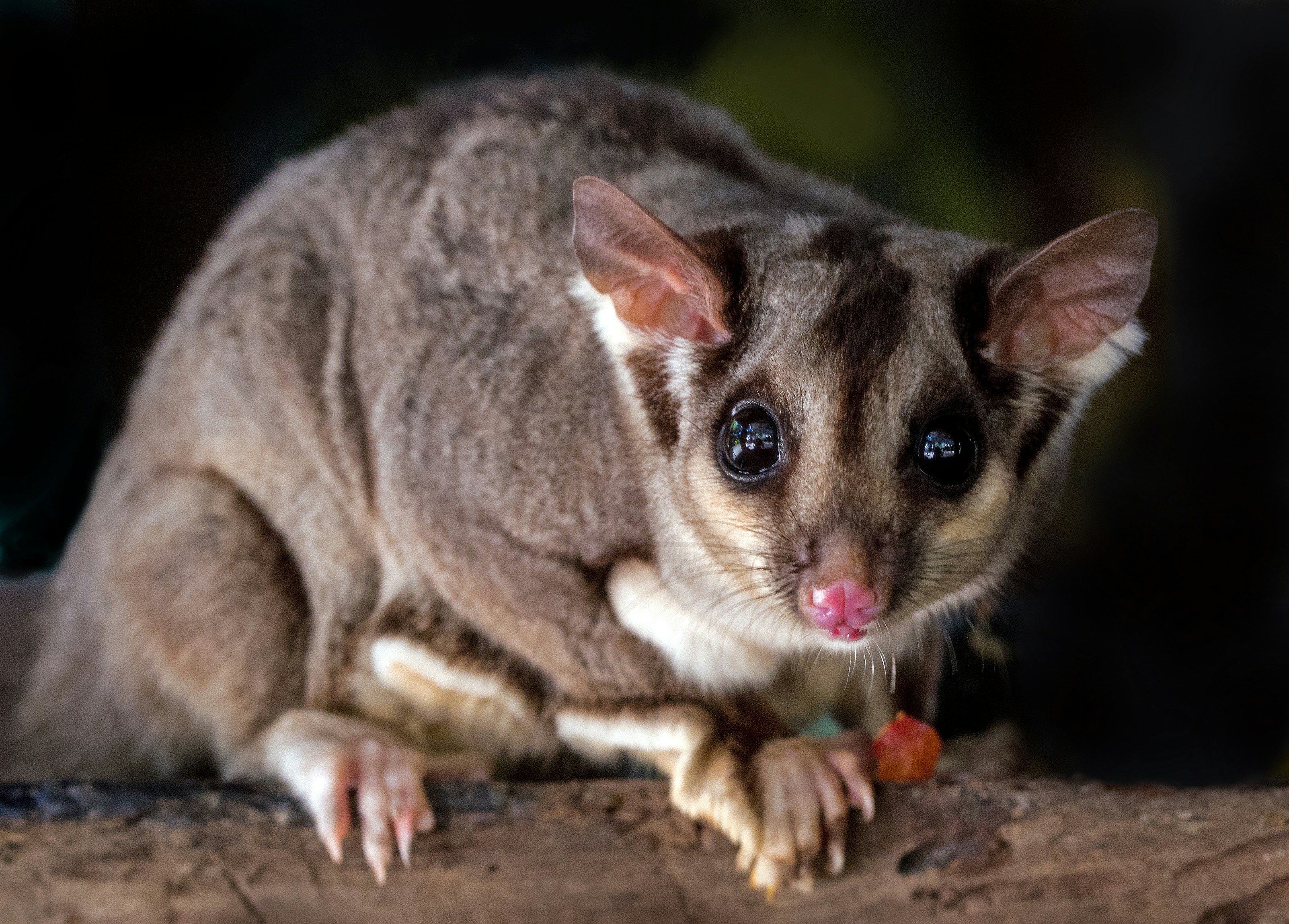
Marsupial