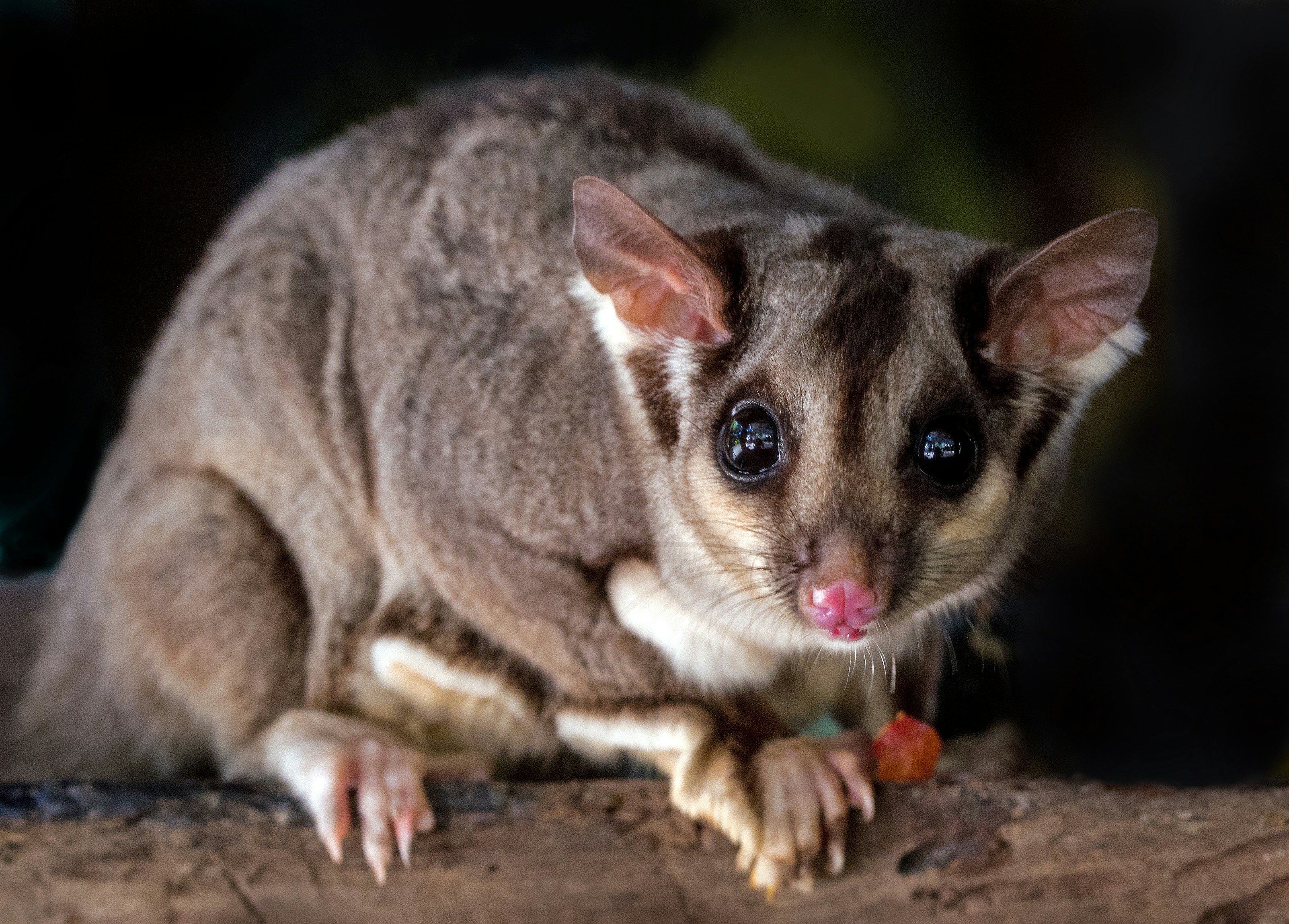
Sugar Glider

Marsupial Gliding Mammal Social Animal

These adorable marsupials are known for their ability to glide through the air using a patagium, a membrane stretching from their wrists to their ankles.
Sugar Glider

Species Overview

The sugar glider (Petaurus breviceps) is a small, nocturnal marsupial native to Australia, Indonesia, and New Guinea. They get their name from their love of sweet foods and their ability to glide through the air.

Sugar gliders are social animals that live in groups called colonies in the wild. They are known for their large eyes, bushy tails, and the patagium that allows them to glide distances of up to 50 meters.

These fascinating creatures have become popular pets in recent years, but they require specialized care and a significant time commitment due to their social nature and specific environmental needs.

Scientific Classification

  • Kingdom: Animalia
  • Phylum: Chordata
  • Class: Mammalia
  • Infraclass: Marsupialia
  • Order: Diprotodontia
  • Family: Petauridae
  • Genus: Petaurus
  • Species: Petaurus breviceps

Natural Habitat

Sugar gliders are found in the forests of eastern and northern Australia, New Guinea, and the Bismarck Archipelago. They prefer tropical and subtropical forests with plenty of trees for gliding and nesting.

In the wild, they live in tree hollows, using leaves and bark to create nests. They are arboreal animals, spending most of their time in trees and rarely coming to the ground.

Their natural diet consists of tree sap, nectar, insects, and small vertebrates. They have a specialized tongue that allows them to extract nectar from flowers and sap from trees.

Optimal Habitat Conditions

  • Temperature: 15-30°C (59-86°F)
  • Humidity: 50-70%
  • Vegetation: Eucalyptus and acacia forests with dense canopy
  • Nesting Sites: Tree hollows 10-30 meters above ground
  • Gliding Paths: Open spaces between trees with minimum 10 meter gaps

Habitat Threats

  • Habitat destruction from logging and land clearing
  • Climate change causing droughts and extreme weather
  • Predation by introduced species (cats, foxes)
  • Illegal trapping for the pet trade
  • Competition for food with other native species

Care Requirements

Housing

  • Minimum cage size: 36" x 24" x 36" for a pair
  • Multiple levels with branches and perches for climbing
  • Nest boxes or pouches for sleeping and security
  • Toys and enrichment items to prevent boredom
  • Bar spacing no larger than 1/2" to prevent escape
  • Substrate: Paper towels or aspen shavings (avoid cedar/pine)
  • Temperature control: 70-80°F (21-27°C) with low humidity

Social Needs

  • Highly social - should be kept in pairs or small groups
  • Need daily interaction and bonding time with owners
  • Can become depressed and develop behavioral issues if kept alone
  • Use scent marking and vocalizations to communicate
  • Establish a hierarchy within groups - may require separate feeding stations
  • Bonding process takes 2-4 weeks - be patient and consistent

Diet

  • Balanced diet of fruits, vegetables, proteins, and specialized supplements
  • Fresh water available at all times in a drip bottle
  • Insects (crickets, mealworms) as protein source - gut-load 24 hours before feeding
  • Commercial sugar glider diets for balanced nutrition (avoid seed mixes)
  • Fruits: Apples, grapes, mangoes, melons (in moderation)
  • Vegetables: Carrots, sweet potatoes, leafy greens
  • Avoid chocolate, caffeine, high-sugar human foods, and toxic foods like avocado
  • Feeding schedule: Twice daily - once in the evening (their active time)

Health and Wellness

  • Common Health Issues: Calcium deficiency (metabolic bone disease), obesity, dental problems, and stress-related illnesses.
  • Signs of a Healthy Sugar Glider: Active at night, clear eyes, clean fur, regular eating habits, and social interaction.
  • Veterinary Care: Find an exotic animal veterinarian experienced with sugar gliders. Annual check-ups recommended.
  • Parasite Prevention: Regular fecal exams and appropriate deworming as needed.
  • Hygiene: Spot clean cage daily, full cleaning weekly. Avoid bathing - they groom themselves.

Behavior and Training

  • Nocturnal behavior - most active at dawn and dusk
  • Gliding behavior - provide safe spaces for this natural activity
  • Chewing behavior - provide safe chew toys to prevent destructive chewing
  • Training: Can be trained to use a litter box and respond to basic commands
  • Handling: Start with short sessions, use bonding pouches, and avoid sudden movements
  • Vocalizations: Barking, hissing, and crabbing - learn to interpret their sounds

Fun Facts

Gliding Experts

Sugar gliders can glide up to 50 meters between trees using their patagium, with remarkable accuracy.

Marsupial Pouches

Like other marsupials, female sugar gliders have a pouch where their young develop after birth.

Nocturnal Lifestyle

They are nocturnal animals, meaning they are most active at night and sleep during the day.

Lifespan

In captivity, sugar gliders can live up to 12-15 years with proper care.

Quick Facts

Scientific Name: Petaurus breviceps
Average Size: 6-8 inches (body) + 6-8 inches (tail)
Lifespan: 12-15 years (captivity)
Diet: Omnivorous
Conservation Status: Least Concern
Native Range: Australia, Indonesia, New Guinea

Related Species

Axolotl

Axolotl

Amphibian

Bearded Dragon

Bearded Dragon

Reptile